Take a look at the cover of 'Beneath the Perfect World' and you'll see a nothing but shades of grey. The shot was taken by Michael Horsfield, a friend of mine and amateur photographer. I took an interest in his photography after he posted some of his pictures on Facebook, many of them taken whilst out cycling in the Dales. I had a look through his Flickr page. The obvious connection between the location and protagonist made this the likely place to find a suitable cover photograph. I thought the black and white shot captured the bleakness of the protagonist's situation and also the shadow hanging over him.
The image depicts the opening scene of the book. Susanna North suggested superimposed the bike, although I would have been happy just to use the original photograph. I was told the bike would arouse a bit of curiosity in the reader. Why the hell is that there? You find out in the first chapter. The cover picture is Fleet Moss, about fifteen miles from where the fictional location of Clayton is meant to be. It's the middle of nowhere, the nearest major town being Skipton, which isn't that big, and the nearest city being Bradford, some thirty miles away.
So, the more than fifty shades on the cover represent the sinister edge to life in a seemingly gentile village. No bondage gear allowed there. At least if you had it, you would have to be ultra discrete because the locals like to gossip and it's very difficult to keep your life private. Alan doesn't have to anything too outrageous to rock their world. Where the police don't intervene, a deputation of neighbours will.
The inspiration for the community came when I was living in Bradford. I lived in the Urban village of Heaton, in the centre of Bradford opposite the local church. The residents of Clayton were based on the church community. In 2001, the vicar decided to put a mobile phone mast in the spire. The jury was still out at that stage as to whether or not these things were safe and the local community opposed it. What struck me was the outrage the church community showed when the local residents challenged the vicar. It was like, how dare you challenge a man of the cloth. Most surprising was being told no one had ever challenged the vicar before or spoken to him in the way we did. Eh? We were a group of educated, sensible people voicing a concern. We were far from the riotous militants we were made out to be. Yet the slightest dissention caused uproar within the church.
We staged a few peaceful protests outside the church during Sunday worship hours. Mortified by our antics, one of the congregation came out of church with a camera announcing, 'I'm going to take a photograph of this!' What was he going to do, show the world this bunch of infidels? The vicar saw sense and didn't publish it in the church magazines.
They got their mast in the end. I felt as though the thirty or so people who attended the church thought they were the whole world. So I stuck them in the middle of nowhere, where their self-importance could reign, and wrote about them. My protagonist is the rest of us rolled into one. He can't fight them; he just has to go elsewhere.
Friday, 6 June 2014

Tuesday, 3 June 2014
Sex scenes - by no means Fifty Shades of Grey
When I started writing 'Beneath the Perfect World' I was in a bit of a quandary about how much sex I should put in it. How explicit should I make it? The advice on the net was don't overload it. Making a book too erotic limits your target audience. You might be decimating your potential readership. No sex pleases everybody, and a bit of sex won't offend too many, but loads of sex might put people off. Then 'Fifty Shades of Grey' came out. For everyone of the 100 million who bought fifty-shades, think of how many would have bought it had it contained no sex. I can see that's a bit flawed, really.
In the end, I didn't conform to any rubric when I put the sex in. The reader needed to know that the characters had a sexual relationship, and how far it enhanced the emotional bond between them, but there is this thing called too much information. Sex in my novel goes beyond the physical act. It impinges strongly on the psyche of my main character, but probably not far enough for the novel to be a psycho-sexual thriller. It does form part of the psychological elements.
My protagonist is by no means a Christian Grey; in fact he's the opposite. He's self-abnegating when it comes to sex, if not baffled when his partner's response indicates he has some sexual prowess. He doesn't know his ability to satisfy a woman and watches, kind of metaphorically scratching his head while she wanders of into the realm of the orgasm.
There is a detachment between them. He ponders over her gratification while she appears to be somewhere else. There is a disunity between the two characters during sexual engagement, which is more orientated towards achieving a goal rather than sharing a journey.
It confirms, however, that the relationship between the two is based on a genuine bond of affection rather than lust.
In the end, I didn't conform to any rubric when I put the sex in. The reader needed to know that the characters had a sexual relationship, and how far it enhanced the emotional bond between them, but there is this thing called too much information. Sex in my novel goes beyond the physical act. It impinges strongly on the psyche of my main character, but probably not far enough for the novel to be a psycho-sexual thriller. It does form part of the psychological elements.
My protagonist is by no means a Christian Grey; in fact he's the opposite. He's self-abnegating when it comes to sex, if not baffled when his partner's response indicates he has some sexual prowess. He doesn't know his ability to satisfy a woman and watches, kind of metaphorically scratching his head while she wanders of into the realm of the orgasm.
There is a detachment between them. He ponders over her gratification while she appears to be somewhere else. There is a disunity between the two characters during sexual engagement, which is more orientated towards achieving a goal rather than sharing a journey.
It confirms, however, that the relationship between the two is based on a genuine bond of affection rather than lust.
Sunday, 1 June 2014
Why I would chose Matthew McFadyen to play Alan in 'Beneath the Perfect World' movie.
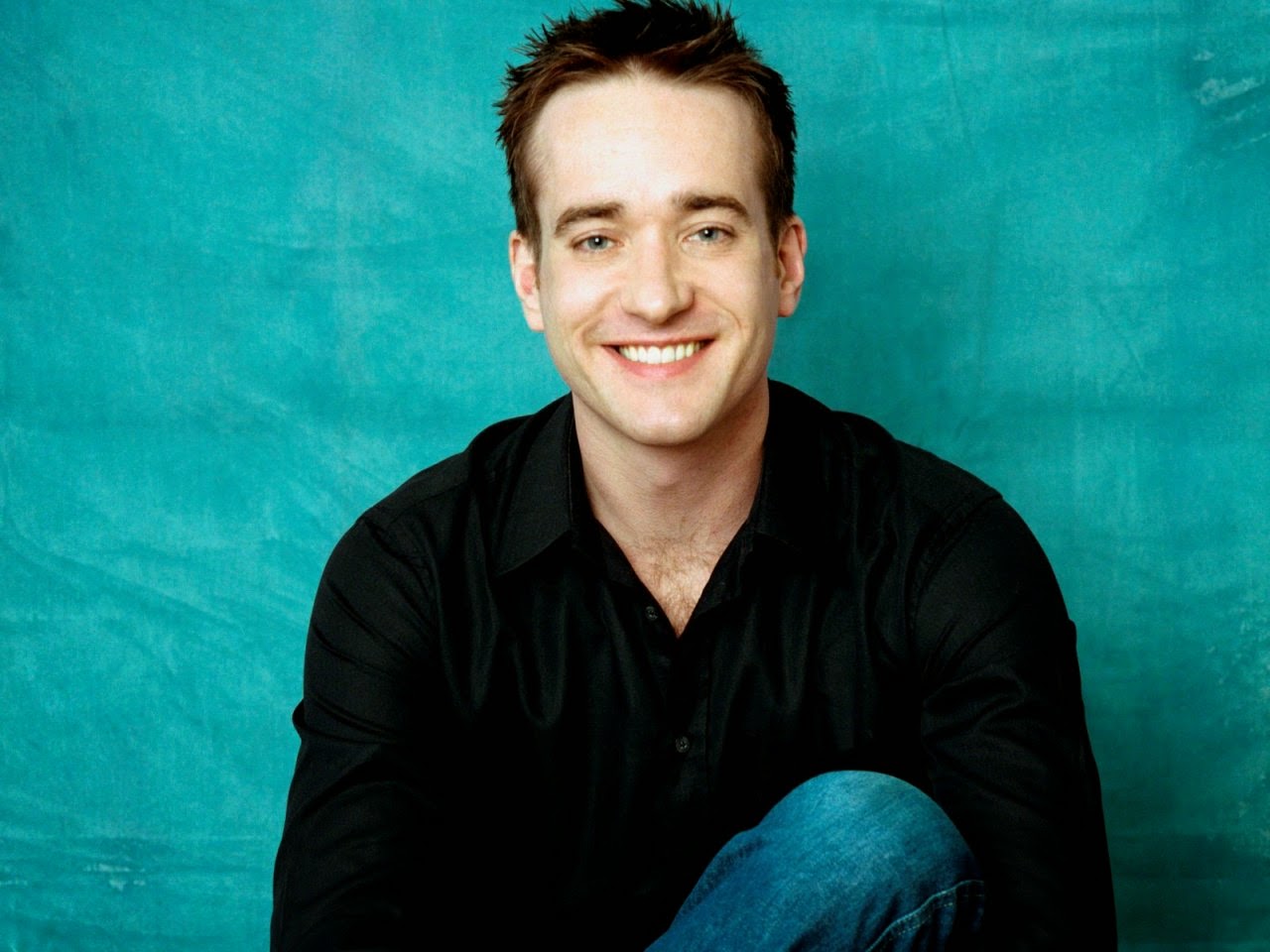 I don't know whether this happens to all novelist, but when I was dreaming up 'Beneath the Perfect World' I had this idea that one day it might become a movie. Alan's character came about after watching Matthew McFadyen's portrayal of Paul Prior in 'In My Father's Den.' Matthew is my eye candy, made all the more sexy by playing a flawed character who you can sympathise with. His whole demeanour in the film was one I wanted to replicate in Alan. Humbled but self-assured, troubled but stoic but will crack under extreme pressure. My editor called Alan a wimp at one stage in the novel because he breaks when things get really tough. Perhaps she expected him to be a romantic hero, but that doesn't make him real.
Even down to the scruffy clothing, Matthew's ability to look good in them makes him the perfect Alan. He's a big bloke, too, and the snagged jumps make him seem so cosy to snuggle up to. He'd have to tone up a bit to suit the role of a fit bloke into mountain biking. If Tom Hanks can do it so can Matthew. I'm not sure whether Matthew would suit black shaggy locks, but it's not imperative he has them. The way he carries himself makes for a more accurate portrayal of my protagonist. And of course, the most obvious reason, he's simply gorgeous.
Friday, 30 May 2014
Faking yourself
How often do you fake yourself? The job interview or any scenario which requires you to fit someone else's mould. It's the same with writing. The book has to meet a certain criteria before it will be accepted for publication. That can be anything from the way it's written to how the characters are presented, to the storyline. My protagonist, Alan, had to be changed to fit the criteria of a hero. I had to make him bolder in some scenarios where I'd made him falter, yet I still had to make him believable and real. Sometimes, when the book was returned from editing, there'd be comments in the margin saying, 'What a wimp!' I couldn't make Alan completely flawless. He goes under a lot of strain in the book. It would be unrealistic for him not to crack up. Without giving the ending away, when I first submitted the plot for appraisal, I was told the ending was too sad. I had to change it to satisfy the reader. Then again, one of the lessons I learned while writing is that you are not writing to please yourself, you are writing to entertain an audience.
I was mentored while writing 'Beneath the Perfect World' and I ended up writing to a formula. Don't get me wrong, the end product was a hell of a lot better than it would have been had I kept to my own writing style. I experimented with metaphors, thinking to gain respectability I had to be Thomas Hardy. It came out far too contrived and then a critique pointed out, Hardy wouldn't be published if he submitted his work today. One thing my editor told me was that I need to let my own voice come through more. I would have thought after all the scrutiny the book went through, I would have got it right by now. Like many pop bands, the second album is usually better than the first. Not always the case, but it's more polished, the band fuse better. The songs are more catchy. The third album just about sustains it then the band reinvent themselves.
True with writing. You perfect your style when you write the first book then polish it for the second. Pressure to meet a deadline for a publisher can mean subsequent books are not as well crafted as early novels. What the hell, the writer has earned an international reputation.
My next book will be more how I want it to be. Not that I've earned an international reputation. I want the protagonist to be flawed and work hard to win the respect of the reader. He's going to do some dodgy things but I think this will make him more interesting. There won't be a happy ending, but that doesn't mean the reader isn't satisfied. This is the prequel, though, to 'Beneath the Perfect World'.
I was mentored while writing 'Beneath the Perfect World' and I ended up writing to a formula. Don't get me wrong, the end product was a hell of a lot better than it would have been had I kept to my own writing style. I experimented with metaphors, thinking to gain respectability I had to be Thomas Hardy. It came out far too contrived and then a critique pointed out, Hardy wouldn't be published if he submitted his work today. One thing my editor told me was that I need to let my own voice come through more. I would have thought after all the scrutiny the book went through, I would have got it right by now. Like many pop bands, the second album is usually better than the first. Not always the case, but it's more polished, the band fuse better. The songs are more catchy. The third album just about sustains it then the band reinvent themselves.
True with writing. You perfect your style when you write the first book then polish it for the second. Pressure to meet a deadline for a publisher can mean subsequent books are not as well crafted as early novels. What the hell, the writer has earned an international reputation.
My next book will be more how I want it to be. Not that I've earned an international reputation. I want the protagonist to be flawed and work hard to win the respect of the reader. He's going to do some dodgy things but I think this will make him more interesting. There won't be a happy ending, but that doesn't mean the reader isn't satisfied. This is the prequel, though, to 'Beneath the Perfect World'.
Tuesday, 27 May 2014
Michael Gove
What else can you do other than just put your head in your hands when you hear Goves latest educational policy. Banning American literature from the English Literature syllabus? What the hell! Does he think writers from other nations can't write and have nothing to offer in terms of cultural enrichment. He may be thinking by forcing young people to read Victorian literature he might be injecting these feckless youths with a bit of moral fiber. Umm, yeah. Pick pockets, armed robbers, drunkards, unmarried mothers, murderers and a bit of antisemitism thrown in for good measure. Makes George shooting Lenny in the back of the head a bit lame. Okay, 'Of Mice and Men' does have a brothel, oh yeah, and Curlly's yellow jackets. That might be going a bit too far. All literature has a place and will always be critiqued from the social-political viewpoint of the reader. Reading Aleksandr Solzhenitsyn is not going to turn everyone communist.
As an English person writing in New Zealand, where does that leave me? Thankfully, I didn't write my book for a GCSE syllabus, but neither did Hardy, Dickens, Elliot, Steinbeck, Miller or Harper Lee. They were chosen for their artistic merit and the salient messages about the society they lived in. Writing in New Zealand, I've met some brilliant writers who struggle to gain recognition simply because of where they are based. If I go back to England to write my next novel, does that make me a better writer?
In the 80s, when I was at school, we were fed Victorian Literature and Shakespeare, to the point where I was led to believe nothing else had any value. When I started writing, I thought I had to be like them to be any good. When the first draft of 'Beneath the Perfect World' was critiqued, I was told Thomas Hardy wouldn't get published if he was writing today. So why does Gove want us to teach young people this is good writing? By modern standards, it's verbose, contains too many elaborate descriptions and relies too much on exposition. Modern writing is driven by the character and the landscape is an integral part of the protagonist.
I enjoy Victorian literature but after writing my own novel, and learning the craft of writing, I thought Hardy was hard work. My editor would have cut out the verbiage and cut the word count down by half, without reducing the story content. There's plenty of modern writers who explore the human condition just as well as Hardy and Dickens; but please Mr Gove, allow our young people to read something they can relate to.
In the 80s, when I was at school, we were fed Victorian Literature and Shakespeare, to the point where I was led to believe nothing else had any value. When I started writing, I thought I had to be like them to be any good. When the first draft of 'Beneath the Perfect World' was critiqued, I was told Thomas Hardy wouldn't get published if he was writing today. So why does Gove want us to teach young people this is good writing? By modern standards, it's verbose, contains too many elaborate descriptions and relies too much on exposition. Modern writing is driven by the character and the landscape is an integral part of the protagonist.
I enjoy Victorian literature but after writing my own novel, and learning the craft of writing, I thought Hardy was hard work. My editor would have cut out the verbiage and cut the word count down by half, without reducing the story content. There's plenty of modern writers who explore the human condition just as well as Hardy and Dickens; but please Mr Gove, allow our young people to read something they can relate to.
Sunday, 25 May 2014
Silent Characters
I've always been intrigued by the role of silent characters in novels. That's why I decided to put one in my novel, in the form of Alan Bell's former girlfriend, Louise. She appears again in silent form in the prequel to 'Beneath the Perfect World' which I'm currently writing. Although you hardly see them in their own right, they strongly influence the main plot; they mainly appear in the flashbacks, memories or thoughts of the main characters. They are like an omnipotent force driving the story line. Eva Smith in 'An Inspector Calls' changes the whole political outlook of the younger characters in the play. Fanny Robin in 'Far From the Madding Crowd' does more harm dead,despite being pathetic when she's alive. She determines the fate of Bathsheba and Francis Troy. She has the trait of someone who will inherit the earth. She's meek. Hardy's religious statements are embedded in her role and it's interesting how, rather than damn a sinner, like he does in his other novels, he gives her power in the afterlife. In all three texts, the silent character is dead. Each one testifies to the old saying, 'You can't fight a ghost.'
Monday, 11 November 2013
The Rules of Writing - Some advice for writers.
The best writing is sleight of hand. Hannah’s story succeeded in part because she used accepted novel-writing techniques to hide a challenge to socially accepted norms. And she did so using a stiletto so thin that few readers will notice their moral high ground has been compromised. And that’s good storytelling.
There are lots of rules when it comes to writing English, and even more rules when it comes to communications. Breaking rules is fine, except when it confuses your audience to the point where they have no idea what you’re trying to convey. Or worse,when they are tossed out of that magical unspoken contract between writers and readers: the contract that says, 'let me tell you a story' and it takes them out of their world for an hour or day into another world. Storytelling uses a formula that’s worked for at least 4,000 years (in written works, probably 40,000 in oral storytelling). Before a reader can fall in love with your characters, they need to make emotional investment in them; they need to fall in love (or hate) with them in order to care about their story. To do that, within the first few paragraphs, preferable the first lines, the reader must empathise with the character.(s) Once you have seduced the reader, they will follow your character page after page, even when he or she takes them to bizarre places or makes morally repugnant decisions. In spec fic we call this first stage familiarisation but it’s really entrapment. We as writers have seduced the reader with commonplace realities, camouflaging our intention within the conventional rules of writing. Then we pounce, and drag the reader into the rabbit hole, masking the journey into the unknown with acceptable and comprehensible rules of writing.
Storytellers are tricksters, seducers, who use conventional rules of English to play the game we all love to play. But of course we doubt ourselves! Every day, with every word, we wonder if we have communicated what we intend—and then we decide to intend something different and re-write 120,000 words in the first person rather than third person (that was me, by the way, on my ninth novel).
Once you school yourself to do so, you realise rules give you more license to be creative because they create clear benchmarks and boundaries rather than having your creativity pulled in myriad directions.
Rules are also good for Spring cleaning. By that I mean, if you get stuck writing a passage (or even the next word). Stop. Go back to the beginning and clean up what you have. Read it aloud. Check the spelling. And 90% of the time something will strike you as not being quite right, or a gaping plot hole appears. Now you have a problem and you have to fix it. And guess what? Suddenly you’re writing again!
cheers
Subscribe to:
Posts (Atom)